

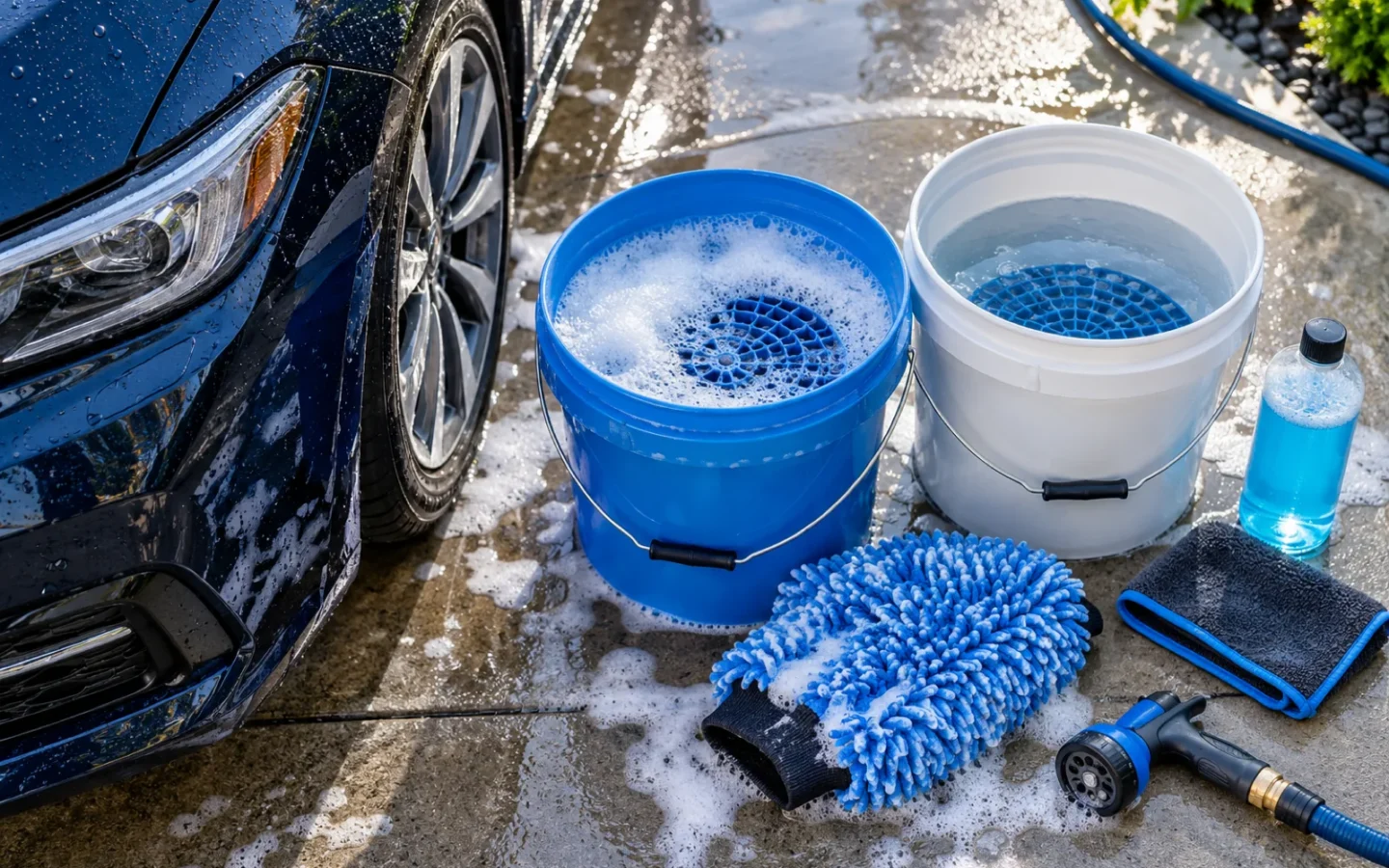
Most wash scratches are not caused by water or shampoo. They are caused by hard particles moving across clear coat under pressure. The two-bucket method is useful because it manages those particles—but only if the rest of the wash process does the same.
The job of the second bucket
One bucket holds the wash solution. The other holds plain rinse water. After a mitt cleans one small section, it is agitated in the rinse bucket before it returns to fresh shampoo. The point is not ritual or visible foam. It is to leave grit behind instead of carrying it around the vehicle.
A grit guard helps by giving the mitt a surface to release debris against and by reducing the water movement at the bottom of the bucket. It does not trap every particle, and it does not make a visibly dirty mitt safe. Inspect the fibers as you work.
Pre-rinse does more than another bucket
Loose contamination should leave the panel before anything touches it. A deliberate rinse, working from the roof down and spending time around rocker panels and behind wheels, often removes more risk than adding another accessory to the bucket.
Foam can extend dwell time and make missed areas obvious, but foam thickness is not cleaning power. Do not let it dry, and do not assume it has dissolved bonded contamination.
Work from clean to dirty
Start with the roof and glass, then upper body panels, then lower doors, bumpers, and rocker areas. Use separate tools for wheels and paint. The lower third of a car carries the most abrasive road film, so treating every panel with the same mitt and sequence defeats the method.
Drying is part of the wash
A clean wash can still end with marks if a small towel is dragged until it is saturated. Use a large, clean drying towel with light contact, or blow water from seams before a final blot. If the surface does not feel clean under the towel, stop: drying pressure is not a substitute for another wash pass.
A practical minimum
- One wash bucket and one rinse bucket, each clearly assigned.
- A clean microfiber mitt with enough pile to lift particles away from paint.
- Separate wheel tools.
- Shade, cool panels, and a process small enough that shampoo never dries.
- Fresh drying media rather than one overloaded towel.
The system works because every stage reduces how much abrasive material is pressed into the finish. The buckets matter. The sequence matters more.