

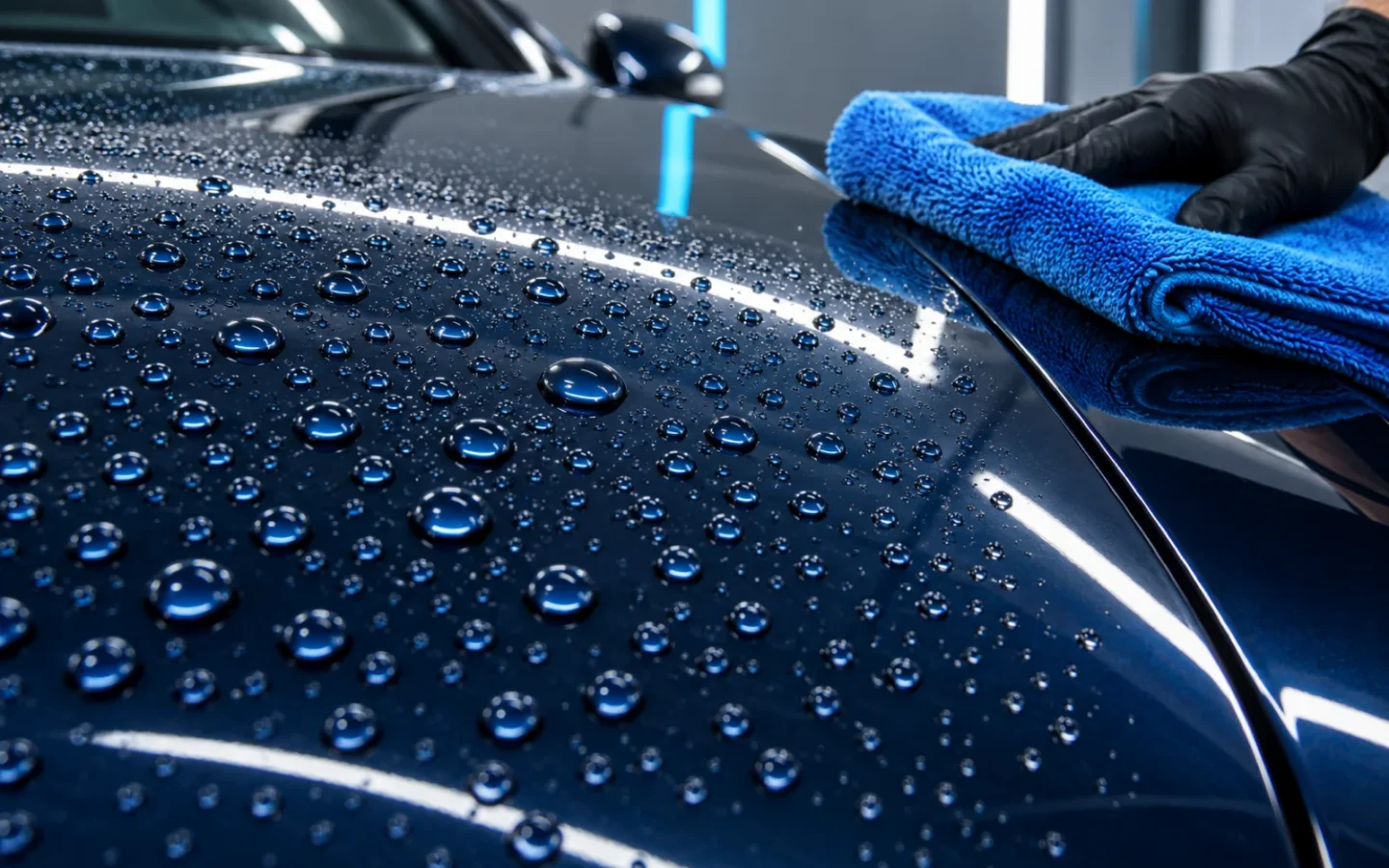
Water beads when the surface resists wetting. It is visually satisfying and easy to photograph, which is why it is often treated as proof that protection is working. The conclusion is only partly justified.
Bead shape is a surface measurement
On a hydrophobic surface, water makes a higher contact angle and pulls into rounder droplets. On a high-energy or contaminated surface it spreads flatter. Fresh waxes, sealants, and coatings can all create strong beading, but products with very different durability can look similar on day one.
Contamination can hide a healthy layer
Road film, mineral deposits, surfactant residue, and some drying aids change how the top few molecules of the surface interact with water. A coating may still be present underneath while its beading looks weak. Wash with a residue-free shampoo and perform a careful decontamination before declaring protection dead.
Beading is not always the preferred behavior
Round droplets can remain on horizontal panels and concentrate minerals as they evaporate. A product that sheets water quickly may leave less standing water even when its beads look less dramatic. Evaluate how the surface clears during the rinse and how easy it is to dry, not only the shape of droplets under a spray bottle.
Use a repeatable check
- Wash the panel with the same neutral shampoo and rinse thoroughly.
- Observe both the initial bead shape and how quickly water clears.
- Compare upper and lower panels; lower sections collect more road film.
- Check slickness only with a clean towel and minimal pressure.
- Record the maintenance products used since the last test.
When to top up or replace
If performance returns after cleaning, the problem was contamination. If the surface remains slow to shed water across properly cleaned panels, a compatible maintenance product may restore behavior. If cleaning and the manufacturer’s approved maintenance process make no difference, renewal is more defensible.
The useful question is not “does it bead?” It is “does the surface still behave predictably after a proper wash?” That answer says more about real protection than a single dramatic photograph.